


How long after pouring concrete can a trowel be used?
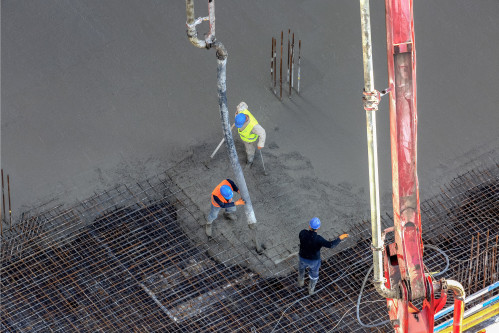
Concrete troweling must begin at the right time – neither too early nor too late. This usually occurs a few hours after pouring the mix, but time alone shouldn't be the sole criterion. The most important factor is the appearance and behavior of the concrete surface.
The most important information
- Floating usually begins 2-6 hours after pouring the concrete, although on cold days it may take much longer.
- The concrete is ready for troweling when there is no free water left on the surface and the footprint is approximately 2-4 mm deep.
- For larger projects, it is worth preparing the appropriate equipment in advance, e.g.
- concrete trowels
- .
How long after pouring the concrete can you start troweling?
In most cases , troweling is done the same day the concrete is poured . At temperatures around 20°C, it's a good idea to first assess the surface after 2-3 hours. However, this doesn't mean you should start the trowel right then – concrete can set faster or slower.
The most important thing is to observe the slab. The surface should no longer be shiny and wet, and excess water should have drained away. The concrete should now be stable but still pliable enough to be smoothed.
Don't start troweling if you see water or cement laitance on the surface. This can easily weaken the top layer of the floor, which can later result in dusting or peeling of the surface.
What influences the moment of trowelling of concrete?
Several factors influence concrete readiness time. The most important are :
- weather conditions,
- type of mixture,
- board thickness,
- rate of water evaporation.
Even on a single surface, concrete may set unevenly – faster when the gate is open, near a wall heated by the sun, or in a place exposed to a draft.
Before starting work, it is worth paying attention to:
- the temperature of the air and the concrete itself,
- humidity and wind strength,
- presence of water on the surface,
- admixtures used,
- hardness of the concrete in several places of the slab.
How do temperature and humidity affect mashing readiness?
High temperatures, low humidity, and wind accelerate surface drying . On a hot day, concrete may be ready for troweling sooner than usual, so it's a good idea to start checking it about an hour after pouring.
On cold days, the opposite is true. When temperatures drop below 10°C, concrete setting slows significantly . The waiting time can be extended by several hours, and in very low temperatures, even into the next day.
How to recognize the right moment to mash?
The best time to trowel will be determined by the appearance and hardness of the surface. The concrete should be matte, uniform, and free of standing water . It should not stick to the sole or sink under the weight of the person performing the test.
It's worth checking several areas of the slab. Pay particular attention to areas near edges, walls, and open passages. These are where the concrete often sets faster than in the center of the surface.
Shoe test – how to perform it properly?
The shoe test is a simple way to assess the surface's readiness. Put on a clean, flat-soled work shoe and carefully place your foot on the concrete. Do not rotate or drag your foot across the surface, as this could damage the fresh layer.
An impression of about 2-4 mm deep usually means the concrete is ready to be floated . A deeper impression indicates the mix is still too soft. If the impression is barely visible, the concrete may already be too hard to be effectively floated.
What mashing methods and techniques are used in practice?
For small surfaces, corners, and hard-to-reach places , hand troweling works best. Floats, trowels, and battens are used for this purpose. This method is precise, but for larger slabs, it is time-consuming.
Power troweling is primarily used for garages, driveways, halls, warehouses, and larger floors. A power trowel allows for a faster and more even surface finish. Proper work speed is especially important for large slabs, as the concrete may bond unevenly.
Not every surface needs to be perfectly smooth. On patios, sidewalks, and driveways, it's better to leave a subtle texture to improve slip resistance.
What tools and trowels are used?
For small repairs, basic hand tools are sufficient. A steel float, trowel, and strip allow you to finish edges, steps, and small sections of slabs. For larger surfaces, power trowels are a more convenient solution.
Depending on the location and scope of work, you can choose:
- electric trowels for work inside buildings,
- petrol power trowels for larger outdoor areas,
- hand-guided models for garages, terraces and smaller slabs,
- larger machines for halls, warehouses and large floors.
When choosing equipment, consider the working diameter of the machine, the width of the passages, and access to power. It's also worth checking the condition of the disc and blades, as worn components can leave uneven surfaces on fresh concrete.
Summary
A power trowel can be used when the concrete is matt, there is no free water, and the footprint is approximately 2-4 mm deep. This usually happens a few hours after pouring the mix, but the time depends on the weather, the type of concrete, and the thickness of the slab. Regular surface inspection, properly selected equipment, and an appropriate work pace will help achieve a durable, even, and aesthetically pleasing floor.
Frequently asked questions
Can concrete be troweled the next day?
Usually not, as the concrete is too hard after an overnight period to be troweled. Exceptions may be made at very low temperatures or with mixes that have a prolonged setting time.
Can you water the concrete while troweling?
Do not add water to the surface to facilitate smoothing. This can weaken the topcoat and increase the risk of dusting and discoloration.
How many times does the floor need to be mopped?
Typically, several passes are made, depending on the condition of the concrete and the desired effect. The first passes are used to level the surface, and the subsequent passes are used to compact and smooth the surface.
Is a trowel suitable for concrete on a patio?
Yes, but outdoors, it's best to leave a slightly rough texture. Concrete that's too smooth can be slippery after rain or in winter.
When can you walk on troweled concrete?
Light foot traffic is usually possible after 24-48 hours. Heavier traffic should be allowed according to the recommendations for the specific mix and concrete curing conditions.