


How to Make Concrete? A Comprehensive Guide
Need to prepare concrete for a driveway, a fence foundation, or a small screed? Proper proportions, careful water dosing, and proper post-pouring care are key. A well-made mix will be compact, durable, and less susceptible to cracking.
The most important information
- Do not add water "by eye"
- – a mixture that is too thin may be weaker and more absorbent after setting.
- For larger batches, use a concrete mixer as it will be easier to maintain a similar consistency in each batch.
- Fresh concrete requires protection from sun, wind, rain and frost, especially in the first days after pouring.
What ingredients make up concrete?
To prepare concrete, you need cement, sand, gravel, and water . Cement binds the other ingredients, and the aggregate is responsible for the mixture's volume and stability. Water is responsible for the setting process, but the amount cannot be too high.
Choose clean aggregate free of soil, clay, and plant debris. Sand should be washed, and gravel should be selected appropriately for the thickness of the piece being constructed. The water should be free of oil, salt, and other contaminants.
If necessary, you can use admixtures that improve workability, sealing, or frost resistance. For larger jobs, concreting equipment will be useful, allowing for faster preparation and placement of the mix.
What are the proportions of concrete ingredients?
For simple home improvement projects, a 1:2:3 ratio is often used —one part cement, two parts sand, and three parts gravel . This is a rough starting point for preparing a mix for a small screed, walkway, or post installation. Keep in mind that these proportions may not be appropriate for structural elements.
The water-to-cement ratio also determines the quality of concrete. The more water you add, the easier it will be to spread, but the risk of weakening the concrete increases. Add water in small portions, after mixing the ingredients.
Proportions per bag of cement
For a 25kg bag of cement, you can prepare about 4-5 buckets of sand and 7-8 buckets of gravel . Assume that one bucket has a capacity of 10 liters. Add about 10 liters of water to start, and only add additional liters if the mixture is too dry.
There are a few things to note about this method:
- wet sand reduces the amount of water needed,
- the gravel should be evenly covered with cement mortar,
- concrete cannot spread over the shovel like thick soup,
- Prepare each subsequent batch according to the same measurements.
Proportions for 1 m3 of mixture
1 m³ of concrete requires approximately 280-350 kg of cement, 600-800 kg of sand, and 1000-1200 kg of gravel . The amount of water is typically in the range of 140-180 liters , but depends on the aggregate moisture content and the desired consistency. At this volume, measuring ingredients "by the bucket" may not provide adequate repeatability.
For larger projects, it's better to choose ready-mix concrete or prepare a mix according to the designer's recipe. This applies especially to building foundations, slabs, columns, and ceilings.
How to choose cement, aggregate and water?
For typical housework, grade 32.5 or 42.5 cement is recommended . Make sure the material is fresh and free of hard lumps – damp cement will not provide a proper bond. Store bags in a dry place, preferably on a pallet, not directly on the ground.
The sand should be fine-grained, and the gravel should be matched to the layer thickness. Grains of 8-16 mm are suitable for general work. Too large a grain size can make it difficult to spread the concrete in a thin form or between reinforcing bars.
When purchasing materials, pay attention to:
- dry, loose cement without lumps,
- sand without clay and dark impurities,
- gravel with even, clean grains,
- water measured with a measuring cup, not a stream from a hose.
How to properly mix ingredients?
First, add some water to the concrete mixer, followed by gravel and sand. After briefly mixing, add the cement, then gradually add the remaining water. This sequence reduces dust and helps achieve a uniform texture.
After adding all ingredients, mix the concrete for about 2-3 minutes. Stop the machine and check the drum for any dry cement lumps. The finished mix should be uniform in color and retain its consistency when shoveled.
How to measure water?
Measure water in liters, preferably using a graduated bucket or measuring container . For a 25 kg bag of cement, start with about 10 liters. Add the rest in small portions, monitoring the appearance and plasticity of the mixture.
Remember that wet aggregate already contains water. Therefore, the same recipe may require different amounts of liquid on a hot day than after rainfall.
How to thicken the mixture and why is it important?
Compaction allows for the removal of air trapped in the fresh mix. This allows the concrete to fill the form more completely and adhere better to the reinforcement. This translates into greater strength and water resistance.
In small forms, you can use a rod for gentle poking and tamping. For foundations, posts, or larger elements, an internal vibrator is a better solution. Insert it vertically for a few seconds and withdraw it slowly.
Avoid these mistakes when compacting:
- too short work, which leaves air bubbles,
- vibrating in one place for too long,
- moving the mixture with the tip of the vibrator,
- adding water before thickening.
For more demanding jobs, you can use concrete vibrators . These devices will help achieve a compact structure without the need for manual compaction.
What are the properties of concrete and the factors that influence them?
Concrete should be durable and resistant to abrasion, moisture, and temperature changes . Its properties depend on the proportions of the ingredients, the quality of the aggregate, the amount of water, and the thoroughness of mixing. The method of compaction and curing after pouring also plays a significant role.
The amount of water has the greatest impact on performance. Excess water increases porosity, reducing strength and frost resistance. Conversely, a mixture that's too dry can be difficult to place and compact properly.
The durability of finished concrete is influenced by:
- weather conditions during concreting,
- the loads to which the concrete will be subjected,
- contact with water, salt or soil,
- time and method of caring for the fresh surface.
How to pour concrete and care for it while it cures?
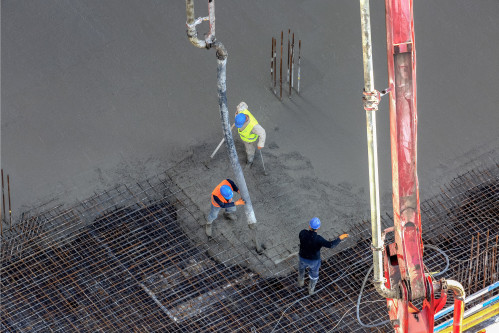
Before pouring, prepare stable, tight formwork and clean the surface . Remove any loose soil, dust, and any remaining materials. If you're pouring on an absorbent surface, you can slightly dampen it.
Spread the mixture evenly and avoid dropping it from a great height . After compacting, level the surface with a float, then apply the desired finishing touch with a trowel. Do not sprinkle dry cement on fresh concrete or add water on top.
After pouring, the most important thing is to prevent it from drying out too quickly . For at least 7 days, cover the surface with plastic wrap, use a damp cloth, or lightly mist the concrete. Concrete reaches its full strength approximately after 28 days.
Summary
To make durable concrete, select pure ingredients, maintain the correct proportions, and add water carefully. Prepare the mixture thoroughly, compact it thoroughly, and protect it from drying out quickly after pouring. For larger jobs, a concrete mixer and vibrator will facilitate a uniform result and reduce the risk of errors. The most important thing is not to rush the process at the expense of quality.
Frequently asked questions
Can you mix concrete without sand?
This is not recommended for standard concrete mixes. The sand fills the spaces between the coarser aggregates and helps achieve a compact, even structure.
How to recognize that concrete is too thin?
If the mix is too thin, it spreads over the substrate and the gravel separates easily. Once set, such concrete can become more porous, weaker, and less resistant to moisture.
Can a new portion of concrete be added to an already setting mixture?
This should not be done. Concrete that has started to set will not regain its original properties after adding water or fresh mix.
How much cement is needed for a small screed?
This depends on its surface area, thickness, and the required concrete grade. First, calculate the volume of the screed, and then select the amount of material according to the specific recipe or implementation recommendations.
Does fresh concrete need to be covered with foil?
Yes, the film prevents water from evaporating too quickly. It's especially useful in hot weather, strong winds, or when you can't regularly mist the surface.