


Concrete Drill – A Practical Guide for Beginners
Wondering how to choose and use a concrete drill? In this article, you'll learn about the different types of drills, their uses, and how to drill concrete effectively and safely.
Most Important Information
- Concrete drills allow you to drill holes in hard materials, offering different drive types for different applications.
- Drilling can be done wet or dry, which affects hole quality and tool life; the wet method is more recommended.
- Safety during drilling is crucial; use appropriate protective equipment and prepare the work area to minimize risk.
Concrete drilling rig – basic information
Concrete core drills are tools that allow for drilling holes in hard materials like reinforced concrete, which is crucial in construction work. They can create holes ranging in diameter from 6 mm to as much as 1500 mm, making them incredibly versatile tools in construction.
One of the greatest advantages of concrete drills is their impact-free and quiet operation. This allows for precise drilling of concrete and reinforced concrete without generating excessive noise, which is especially important in locations where work must be as minimally invasive as possible.
Concrete drills can be divided into different types based on their drive: electric, hydraulic, and pneumatic. Each type has its specific advantages and applications, which we will discuss later in this article.
Types of concrete drills
Concrete drills come with different drive systems, which influence their performance and application. For example, electric drills, such as those with PRIMIE technology, offer high power while being relatively lightweight, making them a popular choice among professionals. They only require a plug, making them easy to use.
Another type is hydraulic drills, which are characterized by high power, ideal for difficult concrete work. Pneumatic devices, although less popular, can be used wherever compressed air is available and are effective in places where electric equipment cannot be used.
What to drill in concrete with?
Drilling concrete requires specialized tools adapted to the hardness of the material. Among the most effective tools are diamond core drills, such as the WABROTECH WT950BE. These advanced machines are indispensable in construction thanks to their ability to precisely drill through reinforced concrete.
In this section, we will discuss the different types of tools used for drilling concrete, such as:
- core drills
- electric diamond drills
We will also consider the differences between:
- wet drilling
- dry drilling.
Concrete core drill bit
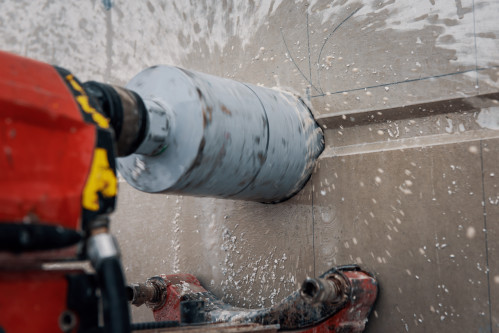
A core drill bit is a tool consisting of a cylindrical body and diamond segments that allow for drilling large holes in concrete. These segments are extremely durable and capable of drilling effectively into even the hardest building materials.
One of the greatest advantages of core drills is their ability to drill large through holes, which is crucial in many construction applications. They enable the precise and rapid drilling of large-diameter holes, significantly accelerating work progress.
Core drills are also highly versatile and can be used in various types of concrete, including reinforced concrete. Their design allows for efficient debris removal, which prevents tool overheating and increases its idle life. In this context, drilling plays a significant role in the drilling process.
Electric diamond drill
Electric diamond drills are known for their high power, which can reach up to 2000 W, allowing for efficient drilling in the hardest materials. Adjustable speed controls allow for adjustments to the specific material, which is crucial for achieving the best results.
One of the main advantages of electric diamond core drills is their ease of use and lower operating costs compared to other types of electric drives. Thanks to their robust design and precise components, diamond core drills are ideal for drilling both small and large through holes in reinforced concrete.
Thanks to their adjustable speed and high power, electric diamond core drills are able to effectively drill a variety of diameters, which increases their versatility and application in various construction jobs.
Wet or dry drilling in concrete?
Wet drilling involves the use of water, which brings the following benefits:
- Extending the life of diamond drill bits thanks to better tool cooling
- Lower energy consumption
- Better quality of holes made
- Reducing the amount of dust generated during operation
Dry drilling, on the other hand, generates more dust, which can impact work quality and operator health, as well as contaminants. This method is faster but leads to faster tool wear compared to wet drilling and dust extraction. The choice between these methods depends on the specific project and operator preferences.
How to prepare for drilling in concrete?
Preparation for drilling concrete is crucial for achieving the best results and ensuring safety. Prepare the appropriate tools, such as drill rigs and bits adapted to the hardness of the concrete. For reinforced concrete, it's best to use diamond drill bits, which are more durable and effective.
Securing the work area before drilling is also important to minimize the risk of damage and danger to anyone nearby. Drilling personnel should always wear safety glasses to protect their eyes from debris and dust, paying particular attention to safety. Regular drilling breaks allow the drill bit to cool and reduce the risk of damage.
Concrete drilling techniques
Each type of drilling machine—hydraulic, electric, and pneumatic—has its own specific advantages and disadvantages, which influence the choice depending on the type of work. Wet drilling reduces tool wear and improves precision by cooling the drill bit and reducing dust.
Before you start drilling, it is a good idea to:
- Plan the route of cables and the places where openings will be created to avoid damage to the building installations.
- Mark the drilling point.
- Check that there are no electrical cables or pipes running near the drilling point, which is crucial for safe and efficient drilling.
Attaching the drill rig to concrete
Using chemical anchors increases the stability of the drill rig's attachment to the concrete. Using anchors to secure the drill rig increases its stability and reduces vibration during drilling, which translates into improved accuracy.
The drill stand should be appropriate for the weight and size of the tool to ensure safe operation. Proper mounting of the drill stand is crucial. This ensures trouble-free, vibration-free, and precise operation of the drill stand.
Rotation speed adjustment
Adjusting the drill's speed to the concrete's hardness is crucial to avoiding damage to the tools and the material itself. Improperly setting the rotary hammer's speed negatively impacts the quality of the drilled holes.
Recommendations for drilling in concrete:
- Lower speeds are recommended for harder types of concrete to prevent overheating of the tools.
- Electric diamond drills are characterized by high power and high rotational speed, which improves drilling efficiency.
- Start drilling at a low speed to ensure the drill bit is inserted steadily into the concrete.
The most common mistakes when drilling in concrete
When drilling in concrete, you may encounter the following difficulties:
- concrete hardness
- concrete density
- drilling resistance
- strength of steel reinforcement
- presence of metal mesh
- dust emissions, which makes work even more difficult.
One of the most common mistakes is applying too much pressure to the drill bit, which can damage it and reduce efficiency. Regularly checking the condition of your tools and adjusting settings to the type of material being drilled are crucial to avoiding errors. Adhering to proper drilling and preparation techniques is essential to avoiding problems during operation.
Safety when drilling in concrete
Safety when drilling concrete is crucial to minimize the risk of accidents and damage. Before you begin drilling, follow these steps:
- Check the technical condition of the equipment, including the drill bit mounting and the condition of the power cables.
- Prepare your work area by removing loose items.
- Ensure a stable drilling surface to ensure a proper connection and remember the connection rules.
When drilling concrete, wear appropriate protective clothing, including safety glasses, dust masks, and gloves designed for harsh environments, and a metal detector. Using a metal detector before drilling increases safety by preventing damage to rebar or cables.
After finishing work:
- Disconnect the drill from the power supply before removing the drill bit.
- Regularly clean the drill rig and remove any concrete debris to prevent damage to the equipment.
- Store the drill in a dry place, away from moisture.
Summary
Drilling concrete requires the right tools, techniques, and preparation. Concrete drills, especially diamond drills, allow for precise drilling in hard materials like reinforced concrete. Each type of drill—electric, hydraulic, and pneumatic—has its own specific applications, which are important to understand in order to choose the right tool for the job.
Drilling safety is crucial to avoiding accidents and equipment damage. Remember to properly prepare your work area, use protective equipment, and regularly check your tools. This will make drilling concrete not only easier but also safer. We encourage you to put your acquired knowledge into practice and experiment with various techniques to become an expert in this field.