


How to clean paving stones?
Paving stones collect dust, mud, leaves, tire marks, and oil stains daily. Over time, moss also appears, and the surface loses its original color. However, you don't have to plan a costly renovation right away. Just choose a cleaning method that's appropriate for the type of dirt, work in stages, and avoid excessive pressure or chemicals.
The most important information
- Always start by sweeping, brushing and testing cleaning products on a small area of the surface.
- Fresh stains from oil, grease, and mortar are easier to remove than old dirt, so it's worth reacting immediately.
- After washing, check the gaps between the cubes, replenish the sand and, if necessary, apply impregnation.
What cleaning methods are worth knowing depending on the paving stone material?
The type of bar influences what pressure, brush and product you can use.
- Concrete cubes
- is usually resistant to brushing and moderate pressure washing (120-150 bar), although older items may be more absorbent.
- Clinker
- Clean gently, as strong acidic agents can discolor the surface. The recommended maximum pressure for a pressure washer is 100-120 bar.
- Natural stone
- , especially sandstone and limestone, requires pH-neutral detergents and a soft brush. The optimal pressure for these materials is approximately 50-80 bar.
Before starting work, check the surface for cracks, chips, or loose components. A strong water jet can deepen existing damage and wash out grout lines.
How to remove typical dirt and stains?
A quick reaction is crucial. Before using a chemical, remove loose dirt with a broom, putty knife, or brush. Then, soak the surface and check if the stain lifts with simple scrubbing . Only if this method doesn't work should you use a product designed for the specific type of stain.
Removing oil, grease and fat stains
Sprinkle a fresh stain with absorbent, sand, baking soda, or cat litter . After a few minutes, remove the material and wash the stained area with soapy water and a brush. Old, dark stains usually require the use of a degreaser for mineral surfaces. After finishing, rinse the surface thoroughly to avoid streaking.
For oil stains, avoid:
- spilling a lot of water before draining the fat,
- using a metal brush on a delicate ankle,
- leaving the degreaser on the surface longer than the manufacturer recommends.
Removing moss and weeds from cracks
First, remove larger weeds by hand , preferably along with the roots. Clean any remaining debris with a grout scraper or a stiff-bristled brush. If moss reappears regularly, apply a spot-applied algae suppressant or herbicide. After cleaning the joints, replenish the sand , as full joints reduce surface overgrowth.
Removing cement stains and tough deposits
First, try removing dried mortar with a plastic scraper and a nylon brush. If the deposits are thick or very hard, use a cement remover designed for your type of paving stone. Apply the product spot-by-spot, according to the instructions, and then rinse thoroughly with water. Do not use strong acids on natural stone.
Difficult settlements may also include:
- rust,
- paint residue,
- traces of rubber,
- old leaf stains.
In such cases, it's better to address the issue locally rather than cleaning the entire surface with an aggressive cleaner. This reduces the risk of discoloration.
What products and tools should I use to clean paving stones?
For basic care you will need:
- broom,
- a brush with medium-hard bristles,
- grout scraper,
- garden hose,
- neutral detergent.
For more demanding cleaning tasks, it's worth having a pressure washer, foam gun, and oil, moss, or efflorescence remover . Also, wear gloves, safety glasses, and sturdy shoes.
Before starting work, prepare:
- a bucket of clean water for rinsing tools,
- a nylon brush for surfaces and a grout scraper,
- sand to fill gaps after washing,
- foil or covers to protect plants and facade elements.
Chemicals vs. home remedies – what to choose?
Home remedies are sufficient for light deposits, dust, fresh organic stains, and small grease stains, as well as when you prefer routine maintenance rather than removing deeply embedded stains. You can use warm water with dish soap, a baking soda paste, or a neutral detergent. Professional cleaners are a better choice for old oil, efflorescence, cement residue, and stubborn moss . Do not use vinegar on limestone, sandstone, or marble, as it can permanently damage their surface.
Chemicals for removing specific deposits: descaling agents, herbicides
Descalers help remove efflorescence and mineral deposits, but they should be selected appropriately for the paving material. Apply herbicides locally, in calm weather, and away from plants. Cover flowerbeds, metal elements, and drains before application. After use, follow the manufacturer's instructions regarding exposure time and rinsing.
Do not apply the product to a hot bar in direct sunlight. The product may dry too quickly, leaving streaks or causing uneven coverage.
Removal of limescale efflorescence and discoloration
White deposits on new paving stones are often a natural result of mineral salt migration. Light efflorescence may subside after a few rainfalls and regular cleaning, so it's not always necessary to remove it immediately with a strong product. If the deposit persists for a long time, use a product designed for efflorescence – first test it on a small area. After cleaning, rinse the surface thoroughly and, once dry, assess whether the paving stones are uniform in color.
Discoloration can also occur after over-cleaning, using the wrong cleaning chemicals, or applying the sealer unevenly. In such cases, don't repeat the intensive cleaning process immediately. First, allow the paving stone to dry completely and check if the difference is due solely to moisture.
How to use a pressure washer to clean paving stones?
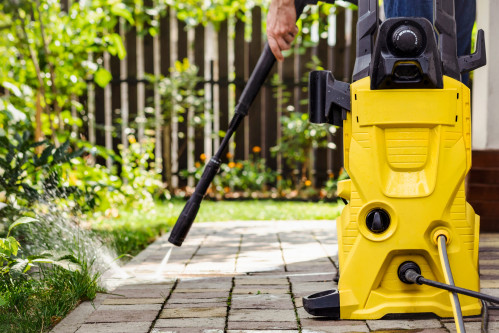
Before starting the device, remove leaves, soil, sand, and larger debris. Adjust the fan nozzle, maintain a constant distance from the surface, and spray in even stripes . Do not stop the nozzle in one spot, as this can visibly discolor the paving stones. Start with a lower pressure and increase it only if the effect is insufficient.
Wash the paving stones in the direction of the water drain to prevent dirt from re-depositing on the cleaned area. Reduce the pressure near joints and edges and work at a slight angle. After washing the surface, check the condition of the joints and replace any missing sand after the paving stones have dried.
How to prepare the cube for cleaning?
Remove flowerpots, furniture, your car, and any other items that could be splashed. Then, sweep the paving, pulling weeds and moss from the cracks . Protect plants if you plan to use chemicals, and protect the surface from splashes on facades or windows. Good preparation reduces the risk of water stains and speeds up the work.
Before cleaning, check the condition of the joints and the alignment of the paving stones. If the elements are noticeably moving or gaps are empty, fill them after cleaning. Do not apply the sealer to a wet surface – the paving stones must be clean and completely dry.
How often should you clean and maintain paving stones?
Sweep the surface regularly, especially in autumn and near trees. Lightly brush and water once or twice a season , and thoroughly clean when persistent deposits, moss, or stains appear. A driveway requires more frequent inspection than a patio, as it comes into contact with tires, oil, and road salt. In shaded areas, react quickly at the first signs of green growth.
After winter, remove sand, mud, and salt before they penetrate deeper into the surface. In spring and autumn, check the joints and the stability of the paving stones.
Follow these rules:
- sweep the paving stones every week – more often near trees,
- check every few weeks for moss and weeds on the surface,
- Inspect the condition of the joints twice a year,
- After the season, winter and intensive use, make sure to wash it thoroughly.
Impregnation and care of paving stones
Impregnation limits the absorption of water, oil, dirt, and sediment, making cleaning easier. Apply the product only after the surface has completely dried , usually at least 24-48 hours after cleaning. Choose a sealer designed for concrete, clinker, or natural stone. Before sealing the entire surface, test it, as some products may slightly deepen the color of the paving stones.
Apply the sealer evenly using a roller, brush, or sprayer. Avoid puddles, as they can leave shiny spots. A sign that the sealer is ready is when water quickly soaks into the paving stone instead of forming beads on its surface.
Summary
To effectively clean paving stones, start by determining the type of material and the level of dirt. In most cases, sweeping, brushing, and moderate washing with water or a pressure washer will suffice. Use stronger products locally, after testing. After completing the work, fill the joints and consider sealing, which will reduce stain penetration and help maintain the surface in good condition.
Frequently asked questions
Can you wash paving stones with dishwashing liquid?
Yes, dish soap will work well on light stains and fresh grease stains. Dilute it in warm water, scrub the surface, and rinse thoroughly.
What weather is best for cleaning paving stones?
It's best to work on a dry, moderately warm, and cloudy day. Avoid direct sunlight, rain, and frost.
Can I use bleach to clean my cube?
This isn't a good choice without checking the paver manufacturer's recommendations. Bleach can cause discoloration and damage nearby plants.
How to reduce mud on the entrance paving stones?
An exterior doormat, regular sweeping, and drainage around the entrance area can all help. It's also worth ensuring the surface slopes properly.
Can the cube be steam cleaned?
Steam can be effective for localized stains and reducing moss. Test the method on a small area before use, especially with old or porous paving stones.